
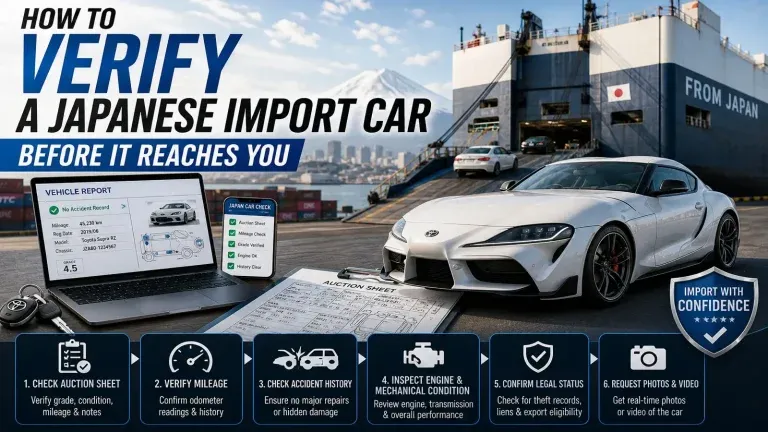
Are you planning to buy used car from Japan but not sure how to verify it properly?
Are you planning to buy used car from Japan but not sure how to verify it properly?
Buying a car from Japan can be a smart decision. You get better conditions, verified records, and more options compared to local markets. Many buyers today prefer to buy imported cars online because it gives access to a wider selection and better quality vehicles. But the biggest mistake buyers make is trusting listings without proper verification.
A car can look perfect in photos but still have hidden issues. That is why verification is not optional. It is the most important step before making any payment.
Why Verification Matters Before You Buy
When you plan to import car from Japan, you are not physically inspect it first. That creates risk.
Some common issues buyers face:
- Incorrect mileage
- Hidden accident history
- Repaired structural damage
- Missing documents
- Mismatch between listing and actual condition
This is why the first rule is simple: verify everything before you pay
Understanding the Journey: From Japan to Your Driveway
Before verifying a car, it helps to understand how it moves from Japan to you. This is an important part of any buying car from Japan guide because each step affects condition and cost.
1. Auction Stage
Most cars in Japan are sold through auctions. Each vehicle is inspected and graded before listing.
2. Transport to Port
After purchase, the car is moved to a port for shipping. Storage and handling conditions matter here.
3. Shipping Process
The car is shipped overseas. This can take a few weeks depending on the destination.
4. Customs Clearance
Documents are checked, duties are applied, and the car is legally cleared.
5. Delivery
The final step is receiving the car and inspecting it again.
Each stage can affect the condition and cost, which is why verification must happen early in the process.
How to Verify a Car Before Buying from Japan
Once you understand the process, the next step is knowing how to verify the car properly. This is where most buyers either protect themselves or take unnecessary risks.
Verification is not just one check. It is a combination of multiple steps that confirm the car’s history, condition, and documentation. Skipping even one of these can lead to problems later.
Below is a clear step-by-step process to help you verify the vehicle before making any payment.
Step 1: Verify Car History Using VIN
The VIN (Vehicle Identification Number) is the most important detail.
A proper VIN check helps you confirm:
- Ownership history
- Accident records
- Mileage consistency
- Previous usage
Without this step, you are relying only on seller claims. This is a key part of learning how to check VIN before purchasing imported car.
Step 2: Read the Japanese Auction Sheet Carefully
Auction sheets are the most important document when buying from Japan. Knowing how to read Japanese auction sheet before buying helps you avoid hidden problems.
They include:
- Overall condition grade
- Interior and exterior ratings
- Damage markings with diagrams
- Notes from the inspector
Small details matter here.
For example:
- A “U” mark may indicate a dent
- “W” can mean a repaired area
- “A” may indicate scratches
Even minor damage is recorded, which makes these sheets very reliable. This is why buyers prefer verify Japanese auction cars before making any decision.
Step 3: Check Mileage Accuracy
Mileage is one of the most manipulated factors in used cars.
To verify it properly:
- Match auction sheet mileage with listing
- Confirm through VIN check
- Look for inconsistencies in service records
Japanese cars usually have accurate mileage records, but it still needs to be verified.
Step 4: Inspect Condition Beyond Photos
Photos are not enough.
You need:
- High-resolution images from multiple angles
- Underbody photos
- Engine bay images
- Interior close-ups
Look for:
- Rust under the vehicle
- Uneven paint or panel gaps
- Interior wear that does not match mileage
This helps you spot problems that are not mentioned in listings. This step is critical when learning what to check before buying used car from Japan.
Step 5: Verify Key Documents
Documents confirm legality and condition.
Important documents include:
- Export Certificate – proves the car can be legally exported
- Auction Sheet – shows inspection details
- Invoice – confirms transaction value
- Registration Papers – show ownership history
Without these, the risk increases significantly. This is essential in any used car import from Japan process.
Step 6: Check for Red Flags Before Buying
Before finalizing, look for warning signs.
Avoid the Car If:
- Mileage does not match across documents
- Auction sheet is missing or incomplete
- Seller avoids sharing full details
- Price is unusually low compared to market
- Damage history is unclear
These are common indicators of hidden issues.
Step 7: Understand Import Costs Clearly
Verification is not just about the car. It also includes cost clarity.
You need to account for:
- Shipping charges
- Import duties and taxes
- Port handling fees
- Registration cost
Ignoring these can lead to unexpected expenses later. This is part of understanding how to import cars safely.
Step 8: Work with a Trusted Source
Even with all checks, the process can be complex. A structured sourcing process helps reduce risk.
At SBK Global Auto Trading, vehicles are verified through:
- Auction sheet validation
- Condition checks before purchase
- Mileage and history confirmation
- Proper documentation handling
- Shipping and customs support
This is why many buyers prefer verified used cars from Japan instead of relying on unknown sellers.
Final Check Before Payment
Before making any payment, confirm:
- VIN check is complete
- Auction sheet is verified
- Documents are clear
- Condition matches reports
- Costs are fully understood
If any of these steps are skipped, the risk increases.
Make the Right Decision with Proper Checks
Importing a car from Japan can give you better quality and cleaner vehicles, but only if you verify everything properly. Price and photos are not enough. You need to check mileage, condition, and documents before making a decision.
The process becomes easier when you follow the right steps. Checking the VIN, reviewing the auction sheet, and confirming documents helps reduce risk. Most problems happen when these checks are skipped.
In the end, a properly verified car gives you more confidence, especially when working with SBK Global Auto Trading. It helps you avoid unexpected issues and makes the buying process more reliable.
Frequently Asked Questions – FAQs
Q1: How to verify car before importing from Japan?
To verify a car before importing from Japan, check the VIN, review the auction sheet, confirm mileage, and verify all documents. This helps ensure the car’s condition and history are accurate.
Q2: What to check before buying used car from Japan?
You should check the auction sheet, vehicle condition, mileage accuracy, service history, and export documents. Also review photos carefully to identify any hidden damage.
Q3: How to read Japanese auction sheet before buying?
A Japanese auction sheet shows the car’s condition, grade, and damage markings. Symbols like scratches, dents, or repairs are marked on a diagram, along with inspector notes that explain the overall condition.
Q4: How to check VIN before purchasing imported car?
You can check the VIN using online vehicle history tools. This helps confirm ownership history, accident records, and mileage consistency before buying.
Q5: How to safely buy car from Japan online?
To safely buy a car from Japan online, verify the auction sheet, check the VIN, and review all documents carefully. Working with a trusted importer like SBK Global Auto Trading gives you verified vehicle details, proper documentation, and a transparent process from selection to delivery.